
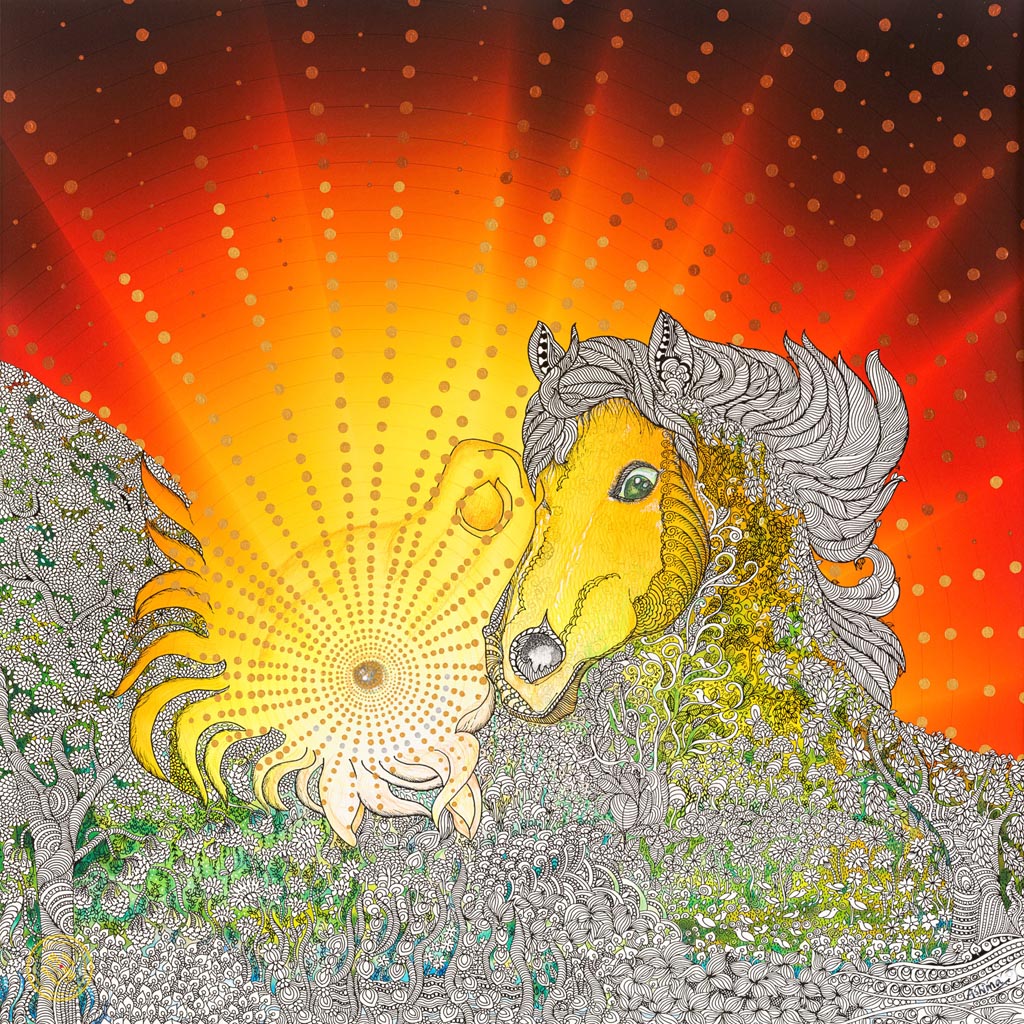
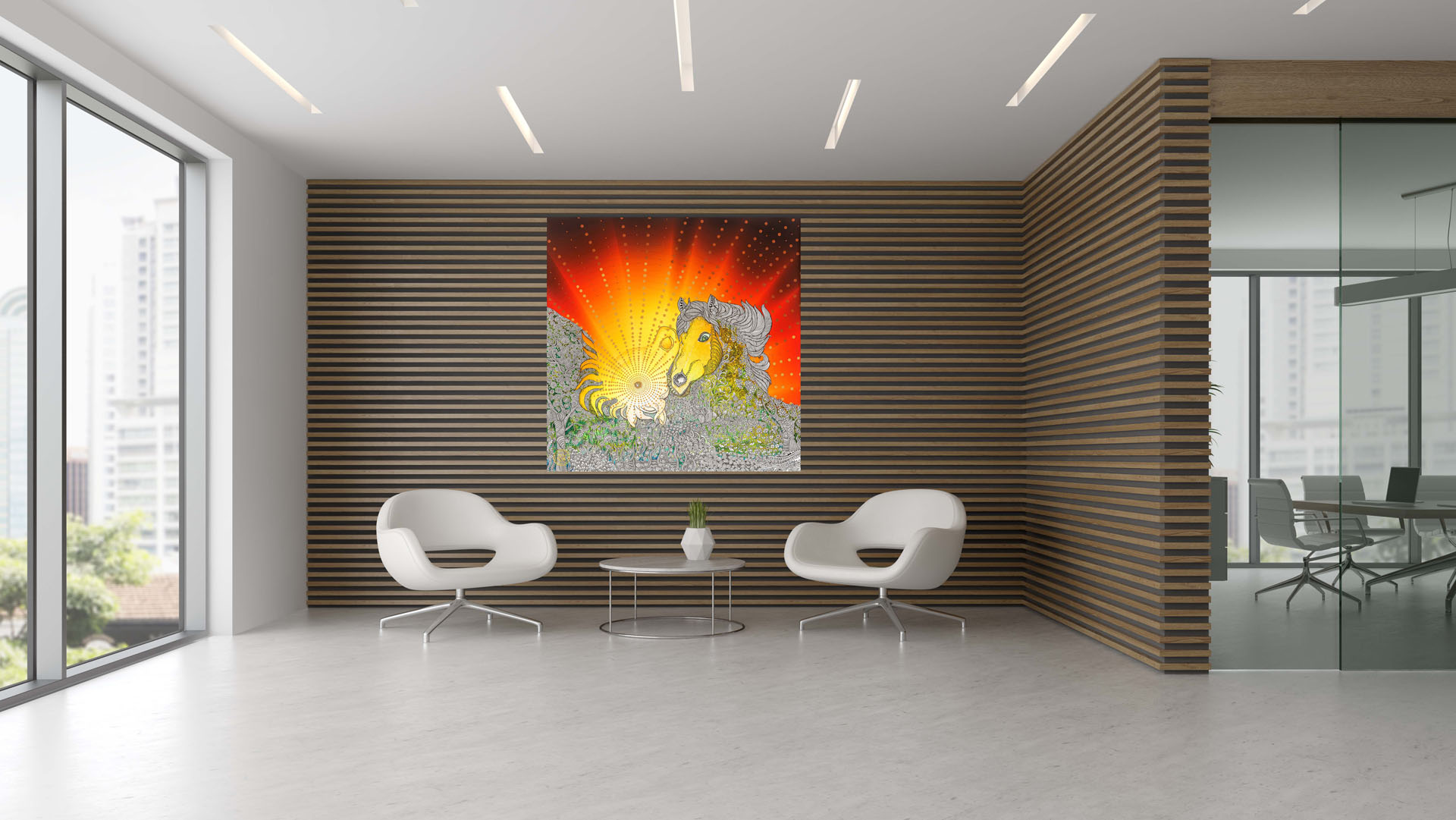
Rising Above
The mighty horse
And the rising sun
The race of Life
And the will to run.
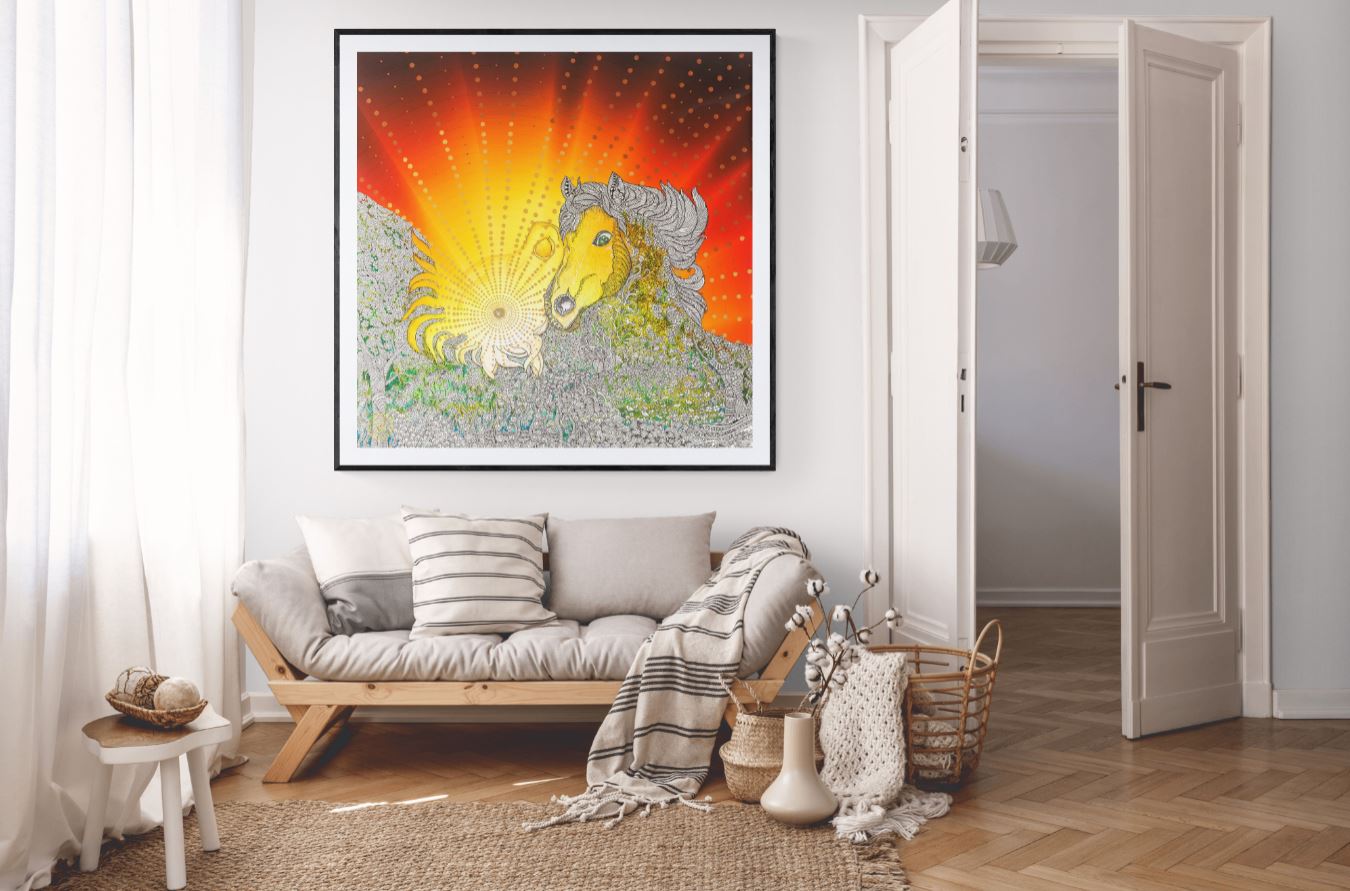
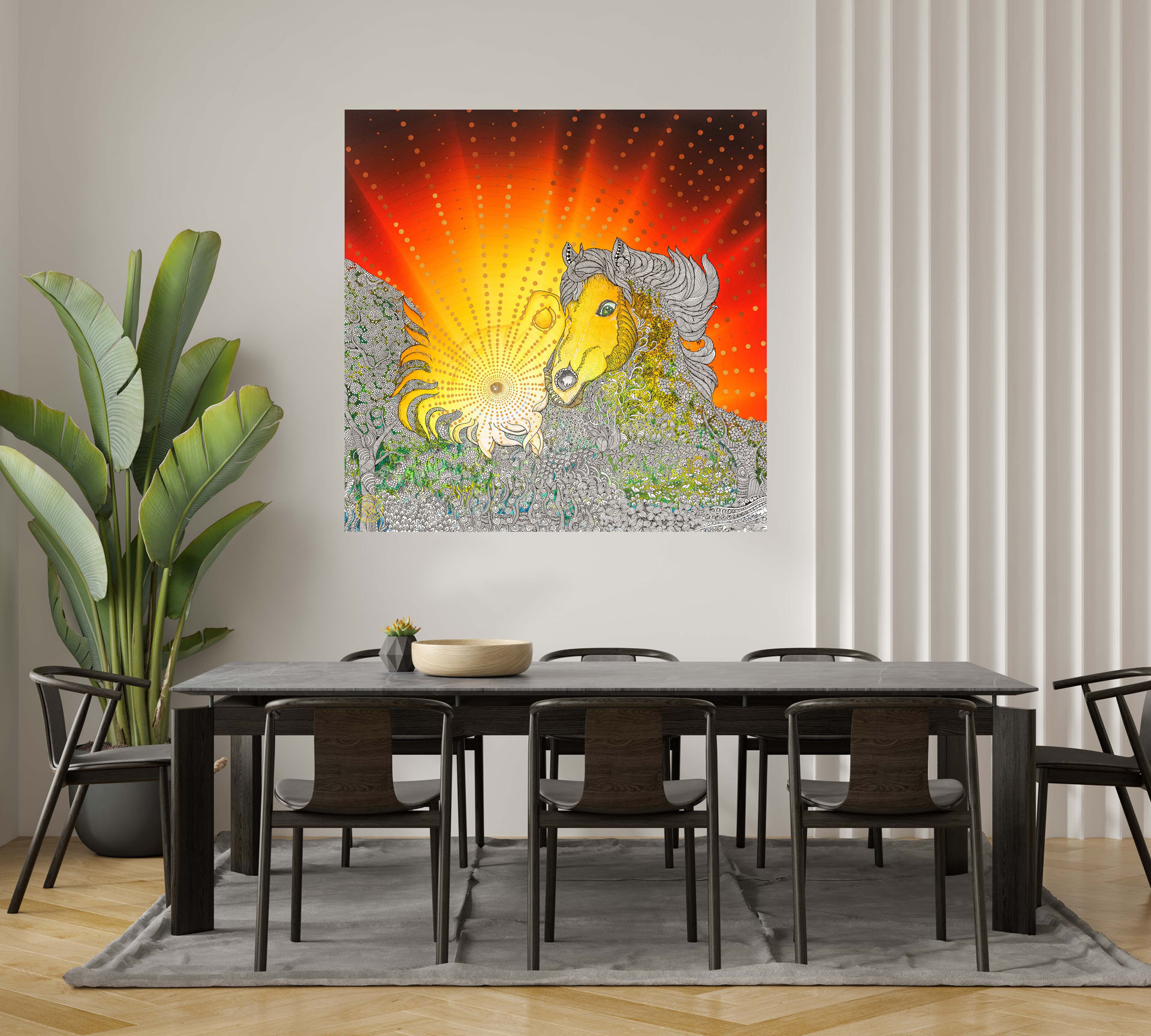
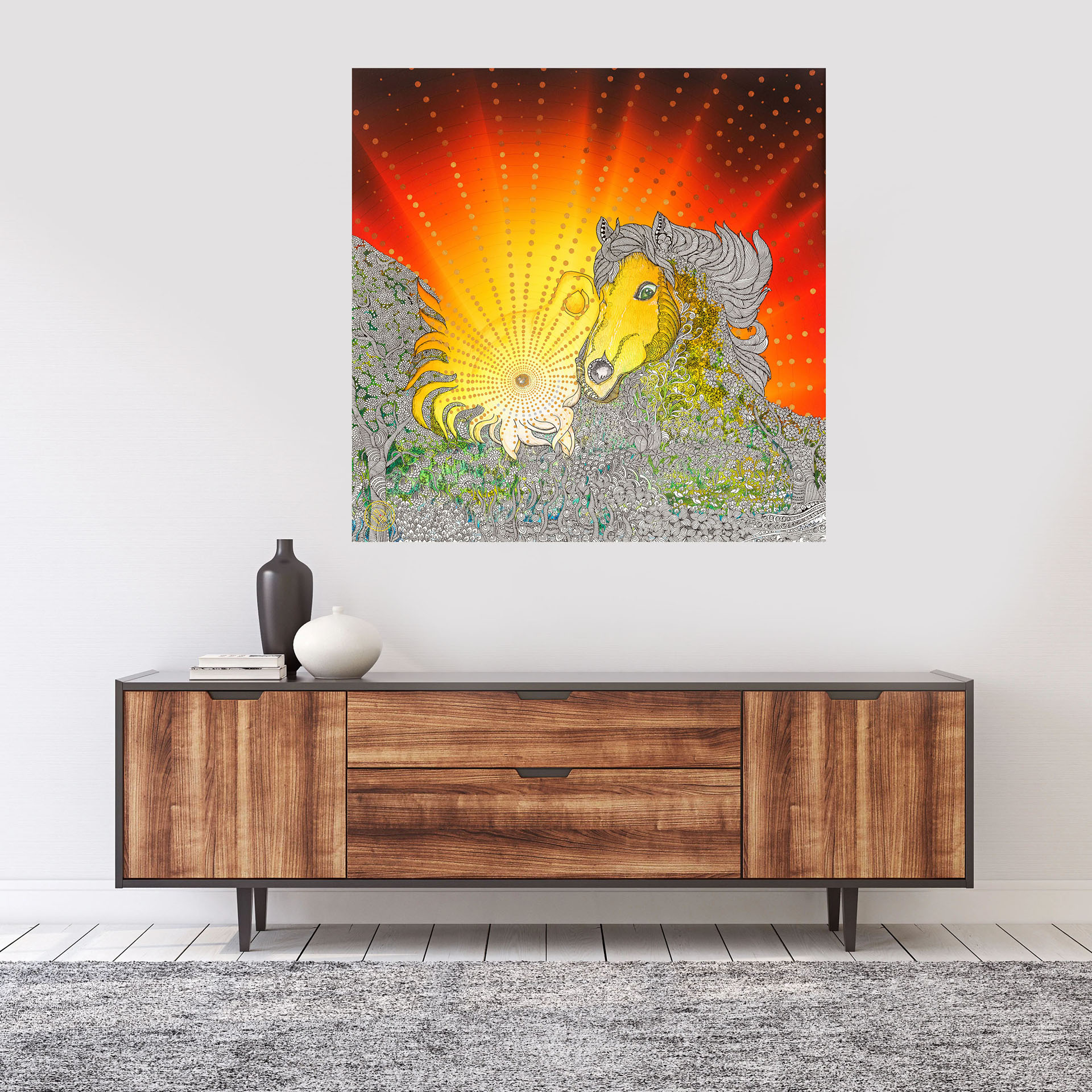
The third in a “The Reflections” collection of three artworks by Ashima Kumar to be released is Rising Above. These paintings represent three attributes of the human mind, the horse representing the race of life. Collectively they symbolise man’s desire to reach his/her eternal goal – the merger with the Supreme Being.
£ 90.00 – £ 550.00
More like this
-

Summer Buddha – At Peace
£ 125.00 – £ 600.00 BUYInspired by the story of Buddha finding enlightenment whilst meditating underneath a tree without moving for seven weeks. This piece, the third in a collection of 4 representing the four seasons of Buddha, pushes the boundaries of natures’ potential further, to the point at which Buddha is immersed so much in nature, both are evenly depicted in the composition. Buddha has a length of time completely alone with nature, which makes him at peace, and a part of his surroundings.
Buddha has become one with the tree and is at peace. This painting also plays on similarities between our anatomy and nature surrounding us. The Buddha sits still and peacefully just like the tree, firmly rooted on the ground.
-

Sleeping Angel
£ 95.00 – £ 400.00 BUYThis artwork by Italian artist Pietro Di Giovannantonio symbolises the belief common to different faiths, that we are never alone, there is always a guardian angel beside us – watching over us and protecting us.
Central to the painting is a sleeping angel, who is dressed in heavenly white and looks serene and calm. A golden ring of divine light surrounds the angel, who appears to be floating through the sky, as if in a dream.
This piece symbolises this intimate bond that our guardian angels share with us as they lead us to the path of righteousness. This guardian angel has descended onto earth from heaven above to protect its believer from evil and generate good and fruitful thoughts.
Artist: Pietro Di Giovannantonio
-

Kalpavriksha – The wishing tree
£ 90.00 – £ 950.00 BUYThe Kalpavriksha is a wish fulfilling divine tree in Hinduism, Jainism and Buddhism. It is said that the Kalpavriksha was one of the 14 things that came out of the Samudra Manthan – the churning of the ocean of milk, along with Kamadhenu, the divine cow that bestows all needs; the tree is also said to be the Milky Way.
Indra (the king of the gods) returned with the Kalpavriksha to his abode in paradise and planted it there. Another myth says that the Kalpavriksha was located on earth and was transported to Indra’s abode after people started misusing it by wishing evil things
Kalpavriksha is now said to be planted at Mount Meru in the middle of Indra’s five paradise gardens (devaloka). It is said therefore that there are as many as five Kalpavrikshas.
In Buddhism a small wish granting tree is depicted decorating the upper part of the “long-life vase” held by “longevity deities” like Amitayus and Ushnishavijaya; the goddess Shramana devi holds jeweled branch of Kalpavriksha in her left hand.
In this painting of the Kalpavriksha, the artist has created the wishing tree in a more contemporary style, sharing his vision of what this mystical tree of desires (maya) could look like.
Artist: Patrizio Landolfi, Original Media: Mixed technique on canvas

